
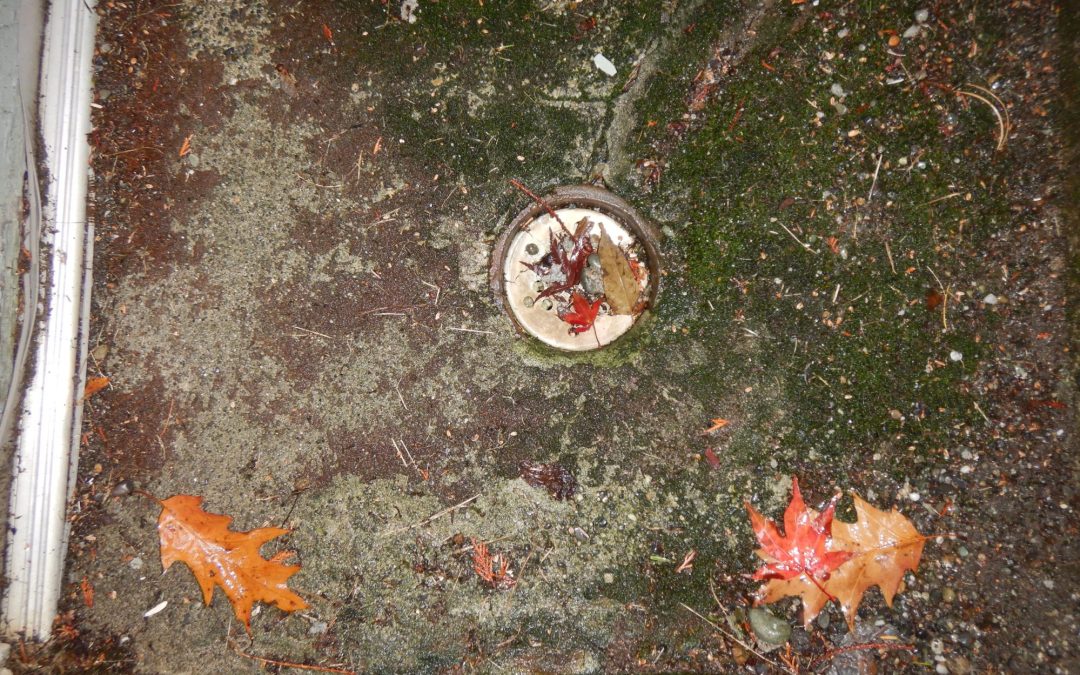
November in Whatcom County means one thing — rain, and lots of it! Our winters here usually aren’t about deep snow (though we do get the occasional cold snap when those Fraser River outflow winds kick in). They’re mostly about water: steady rain, soggy soil, and moisture finding its way into places it doesn’t belong. After 11 years of inspecting homes, I can tell you that a lot of the winter problems I find started with water that wasn’t managed well back in the fall.
Here’s my short list of what to check before the wettest months settle in.
Start at the Top: Your Roof and Gutters
Your roof is your home’s first line of defense, and our damp climate is tough on it.
- Clean your gutters and downspouts. Fir needles, maple leaves, and moss clog them fast, and overflowing gutters dump water right next to your foundation.
- Make sure downspouts send water away from the house. Extensions or splash blocks that carry water several feet away from the foundation make a real difference.
- Keep an eye on moss. Moss holds moisture against your shingles and can lift them over time. If you’re seeing heavy growth, have a roofing professional take a look — and skip the pressure washer, which can strip the protective granules off your shingles.
- Scan for damaged or missing shingles and loose flashing around chimneys, vents, and skylights. Binoculars from the ground are the safest way to do it!
Check How Water Moves Around Your Foundation
Where the rain goes after it hits the ground matters just as much as what happens on the roof.
- The soil around your home should slope away from the foundation, not toward it.
- Clear leaves and debris out of area drains, catch basins, and window wells.
- Keep soil, mulch, and landscaping beds pulled back so they aren’t piled up against your siding. Siding that stays wet is siding that eventually rots.
Don’t Forget the Crawl Space
Lots of homes around Bellingham sit over a crawl space, and winter is when they show their true colors. If you’re comfortable taking a peek with a good flashlight (or can have someone do it for you), look for:
- Standing water or noticeably wet soil
- A torn, missing, or displaced vapor barrier (the plastic sheeting over the dirt)
- Insulation that’s sagging or has fallen down from between the floor joists
- Blocked or damaged foundation vents
- Signs of rodents or other pests
One note on those foundation vents: whether they should be open or closed depends on how your crawl space was designed. If you’re not sure, ask a qualified contractor rather than guessing.
Protect Your Pipes from Cold Snaps
We don’t get a lot of hard freezes, which is exactly why they catch people off guard.
- Disconnect garden hoses and drain your outdoor faucets. Insulated faucet covers are cheap insurance.
- Insulate exposed pipes in crawl spaces, garages, and other unheated areas.
- Know where your main water shutoff is — before you need it!
- During a deep freeze, keep the heat on (even if you’re away) and consider opening the cabinet doors under sinks on exterior walls.
Give Your Heating System Some Attention
- Swap out your furnace filter, and check it regularly through the heating season.
- Have your furnace or heat pump serviced by a licensed HVAC technician — especially if it burns gas or oil.
- Test your smoke and carbon monoxide alarms, and replace batteries as needed.
- If you have a wood stove or fireplace, have the chimney inspected and cleaned before you start burning.
Watch for Moisture Inside, Too
When we close up our homes for winter, all the moisture from cooking, showers, and drying laundry stays inside. Run your bathroom and kitchen exhaust fans, and keep an eye out for heavy condensation on windows, musty smells, or new stains on ceilings and walls. Those are often the first clues that something is going on.
A Little Prevention Goes a Long Way
None of this takes long, and catching a clogged gutter or a torn vapor barrier now is a whole lot cheaper than dealing with water damage in February. If you’d like a professional set of eyes — whether you’re buying a home this winter or just want a maintenance inspection on the one you’ve got — I’m happy to help.
Call or text me at (360) 303-0410 (Whatcom & Skagit) or (206) 799-6084 (King & Snohomish), or schedule your inspection online. Stay dry out there!
Recent Comments